Day 001 · Ospyr Ventures articles
You hired a team. Why is everyone still waiting for you?
The work was delegated. The judgement was not. What happens when a growing company keeps routing every meaningful decision back to its founder?
There is a strange moment in a growing company when the founder realises the business has more people, more tools and more activity, but not much more movement.
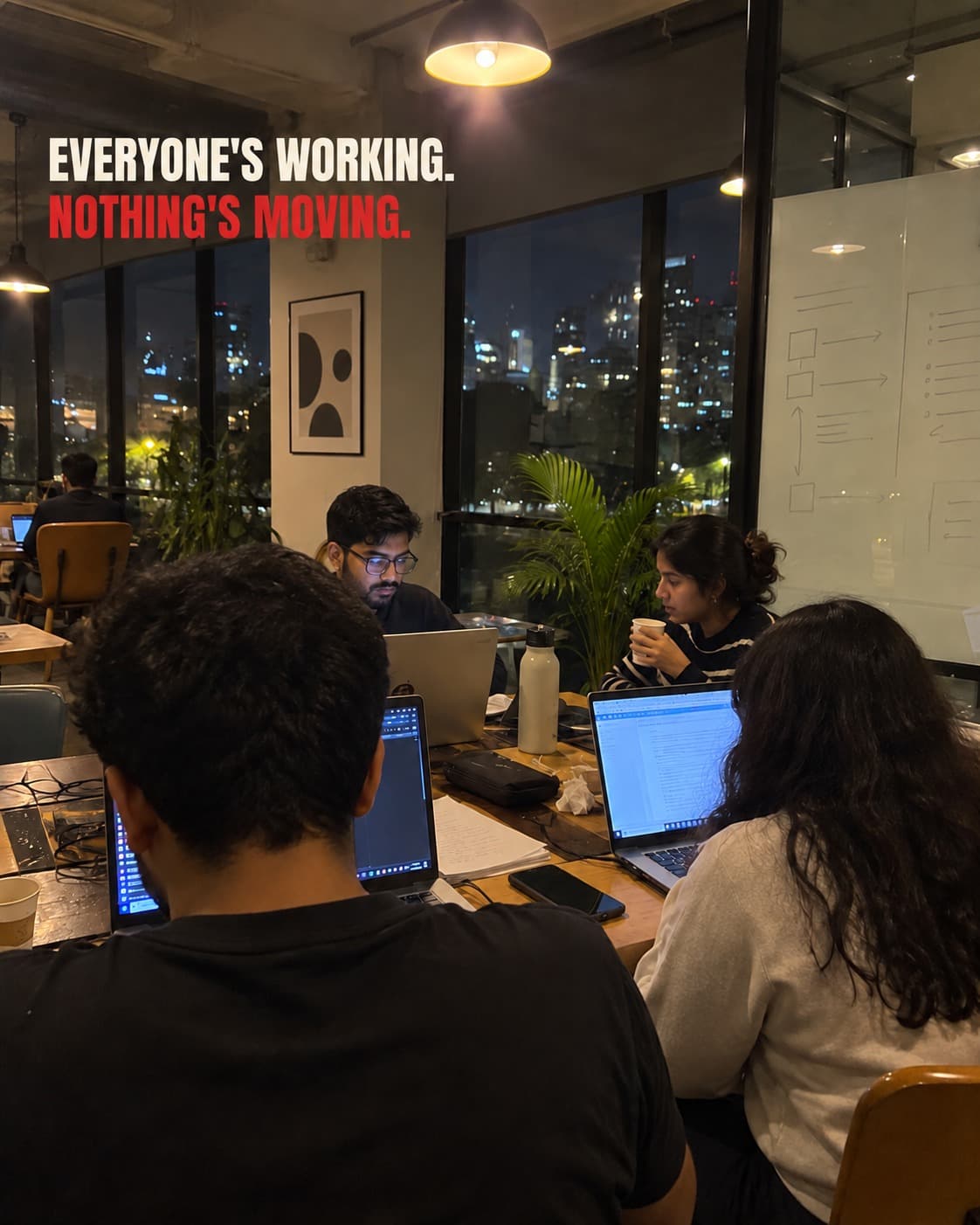
The designer has finished the screen but needs a yes.

The developer has two possible priorities and needs a choice.

The salesperson has a proposal ready but needs one final commercial call.

Even the post sitting in drafts needs one last approval.
Nobody is lazy. Nobody is confused about the task. Everyone is working. But every road eventually leads back to one person.
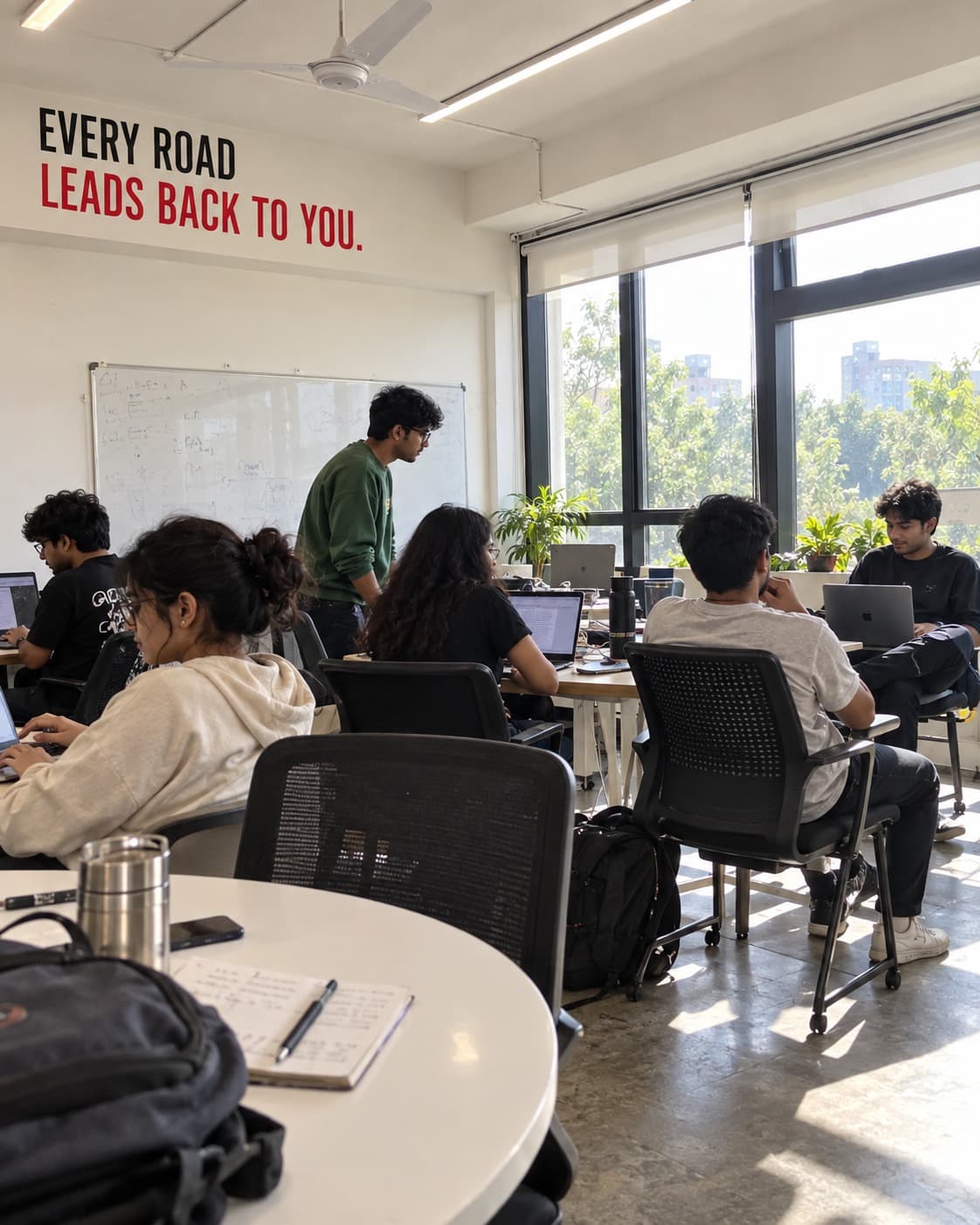
You.
You hired people to create space. Somehow, your day became a queue of questions only you can answer.
That does not always feel like a serious company problem. It arrives as tiny notifications: “quick check”, “small approval”, “which one do you prefer?” Each request may take two minutes. The cost is not the two minutes. The cost is becoming the place where unrelated work waits.
The uncomfortable part is that the team may be doing exactly what the company taught them to do.
If a person makes a call and gets corrected, but asks first and stays safe, asking becomes rational. Soon, the company has delegated the work while keeping the judgement inside the founder's head. People can execute the answer. They cannot reliably produce it.
This is usually described as a delegation problem. I think that description is incomplete.
Delegation answers, “Who will do the work?”
The harder questions are: Who is allowed to decide? What information should they use? How much risk can they accept? When should a decision come back to the founder?
Those questions make up a decision system. If they stay unwritten, the founder quietly becomes the system.
Big operators have different names for parts of this problem. Amazon separates decisions that are difficult to reverse from “two-way doors” that can be changed later. The point is not to copy Amazon. It is to notice that a reversible colour choice and an irreversible legal commitment should not travel through the same approval queue.
Netflix uses the idea of an informed captain: one person gathers views, then owns the judgement. GitLab documents a directly responsible individual who consults others but has final decision power. Again, the labels are not the lesson. The pattern is.
Input can be shared. Ownership cannot be foggy.
McKinsey's work on delegated decisions adds another useful warning: authority alone is not enough. Telling someone “you own this now” without giving them the context, tools and boundaries to decide is abandonment dressed as empowerment.
So the answer is not “the founder should stop caring”. Founder involvement is often the reason the company has taste, standards and speed in the first place. Some decisions really are one-way doors. Some promises change the company. Some exceptions contain information that the founder needs to see.
The problem begins when every decision is treated like one of those decisions.

A useful first move is painfully simple. For one week, record every approval that reaches the founder. Do not optimise it yet. Just write down six things:
- What was the decision?
- How often does it appear?
- Is it reversible?
- Who currently owns it?
- What threshold should trigger escalation?
- What evidence should be stored after the decision?
The list will probably show three kinds of work.
First, ordinary reversible decisions that should move closer to the person doing the work.
Second, decisions that can move only after the team receives the missing context: sales boundaries, quality standards, customer promises or product principles.
Third, genuine exceptions that should still reach the founder.
That distinction matters because the goal is not to remove the founder. It is to stop using the founder's attention as the default routing rule.
This is one of the problems sitting underneath what we are building at Ospyr Ventures.
We are exploring whether a company can carry more of its founder's operating context: who owns a decision, what is reversible, what threshold creates an exception, and what evidence lets the company learn from the result.
That is the hypothesis. We have not earned the right to call it the answer yet.
The part I am still thinking about is the line between preserved context and preserved control. A system that escalates nothing can make expensive mistakes. A system that escalates everything is just the founder's inbox with better branding.
The useful system would make ordinary decisions easier and unusual decisions more visible. It would not ask the founder to approve every road. It would bring them the roads that can actually change the destination.
Until then, many founders will keep living inside the same contradiction: they built a team so the company could move without them, then built a decision process that waits for them anyway.
What is one decision your company still cannot make without you?