Day 003 · Ospyr Ventures articles
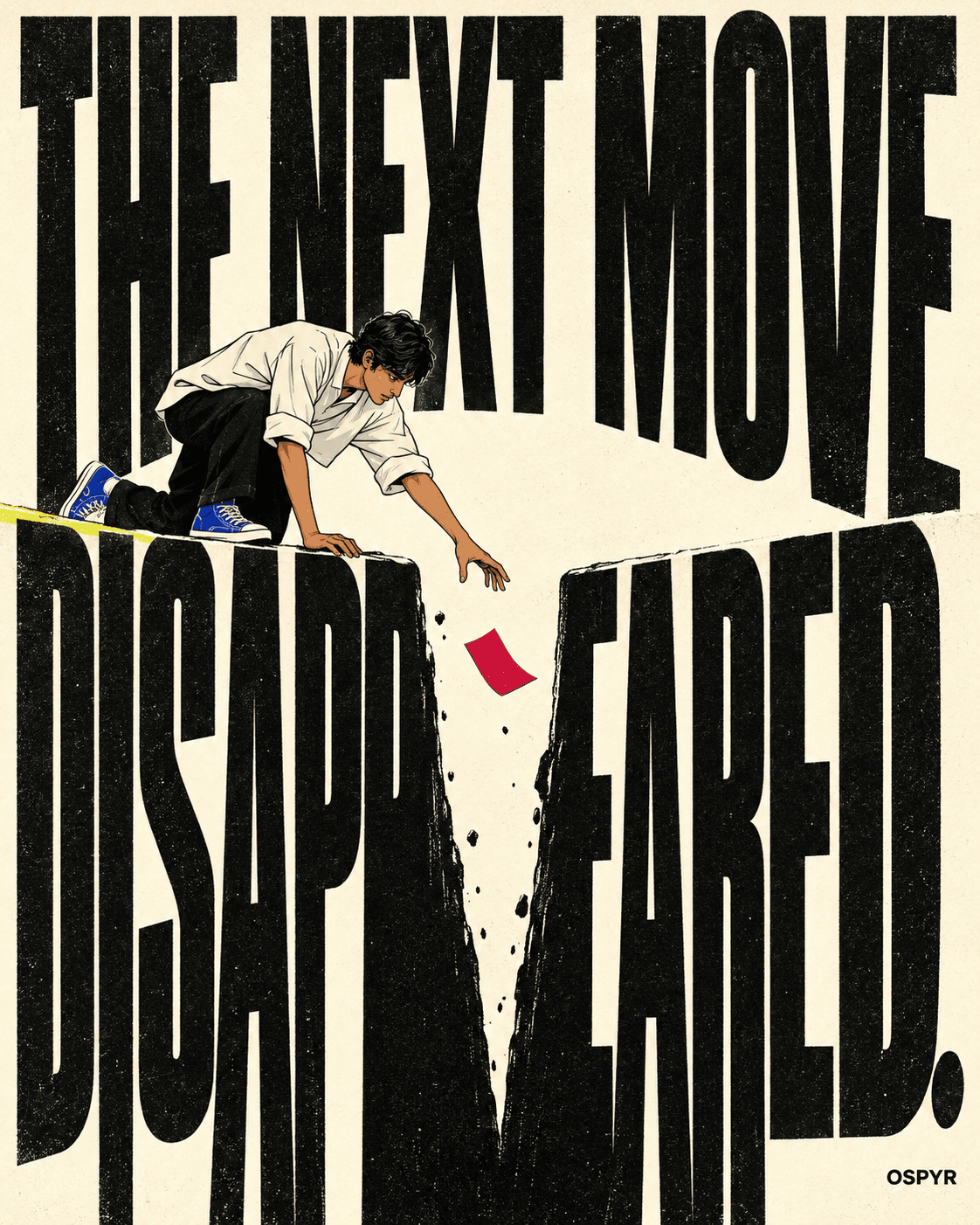
The lead did not go cold. Your company forgot the next move.
Interest did not vanish. The next action did. Early demand dies when the promise, owner and deadline live in different places.
At 11:42 pm on Thursday, the message arrives.
“This makes sense. Send the revised scope and we can review it on Monday.”
You read it from bed. The laptop is in the other room. Friday already has a product issue, two calls and something involving GST that should have been solved last week.
You think, tomorrow.
Friday goes. The weekend goes. Monday becomes three meetings and a release that breaks at the wrong time. On Tuesday afternoon, you remember the revised scope.
The buyer has already started moving with someone else.

Most founders call this a cold lead. That diagnosis is convenient because it makes the buyer's interest feel like the variable.
The harder diagnosis is that the next action disappeared.
The conversation lived in WhatsApp. The scope lived in a document. The price sat in a spreadsheet. The promise lived in your head. None of those places carried the complete answer to four basic questions: what happens next, who owns it, when is it due and what context must survive?
The business had a lead. It did not have a next-action system.

That distinction matters because early demand is expensive. A student founder may spend a week finding ten relevant people, persuade two to take a call and get one person to ask for a proposal. Losing that person because the product was weak teaches you something. Losing them because Friday became noisy teaches almost nothing.
You paid the cost of creating demand and then dropped the handoff between interest and action.
There is old but useful research behind the urgency. A 2011 Harvard Business Review article examined how companies handled online enquiries and discussed a separate study covering 1.25 million leads across 42 US companies. The broad finding was that response speed affected the chance of qualification and that many companies responded far too slowly.
That research is not a universal stopwatch. It mixes industries, predates today's messaging habits and focuses on online enquiries rather than a founder's warm post-call promise. It cannot tell a Bangalore SaaS founder that every reply must happen within five minutes.
It can support a narrower point: interest decays while a company waits.

Gong's own article on post-call follow-up makes a related point: timely responses and complete action items are associated with healthier deals, while important actions still slip through.
Again, this is vendor research. Gong sells software for the problem, and the public page does not give us enough methodology to turn its findings into an Ospyr Ventures promise. The useful part is the shape of the failure. People are not only missing leads. They are losing the actions created inside otherwise good conversations.
Founder-led sales makes this worse in a very specific way.
The founder is often the best person to have the first conversations because every objection carries product information. Pete Kazanjy's Founding Sales treats those early calls as the beginning of a repeatable sales motion, not random acts of charisma. But the same founder usually returns from the call to product, hiring, support and finance.
The relationship stays personal. The follow-up becomes optional admin.

Steli Efti, the founder of Close, has spent years arguing that a follow-up plan is part of selling, not a polite extra. His advice is practitioner testimony from someone who sells a CRM, so it should not be treated as neutral science. It still catches a real founder habit: we treat the first conversation as the difficult work and the next move as something we will remember.
Memory works until the company becomes interesting.
More conversations create more promises. More promises create more context. Soon the founder is not short of leads. The founder is short of a reliable way to preserve what each lead needs next.
A calendar reminder is not enough.
“Follow up with Priya” tells you that something is due. It does not tell you that Priya needs a revised implementation plan, that finance must approve the payment term, that she disliked the annual commitment, or that sending a generic “just checking in” message will make the company look as if nobody listened.
The missing object is not a reminder. It is a compact decision record for the relationship.
At minimum, that record carries the buyer's own words, the promise made, the next action, one owner, one deadline and a stop condition. It should also make the approval boundary obvious. A system may prepare the email and collect the right document. It should not invent a commercial promise or keep chasing someone who has said no.
This is where the current excitement around sales agents becomes more complicated than “automate the follow-up”. Meta's recent Stilla.ai acquisition, Fireflies' voice-agent launch and products such as Gong Assistant all point towards software doing more after a conversation.
Faster is useful. Context is what keeps faster from becoming careless.

An agent that remembers every lead but misunderstands the promise can damage trust at machine speed. A system that drafts everything but asks the founder to reconstruct the context before every approval has moved the typing, not the work.
The useful version would preserve the context automatically, prepare the next move, show why it is due and stop at the boundary where judgement matters.

That is one question underneath what we are building at Ospyr Ventures.
We are studying whether one operating record can connect a customer conversation to the action that follows it, while keeping relationship-sensitive messages under human approval. This is a hypothesis. We have not earned the right to call it the answer.
The unresolved part is not whether software can send another email. It can.
The unresolved part is whether a company can remember without sounding automated, and move faster without making the buyer feel processed.
How many warm leads are currently waiting on a promise only you remember?